ArabSat is one of the most prominent communication satellites in the Arab world, providing vital services across the Middle East, North Africa, and Europe. Since its launch in 1985, ArabSat has revolutionized satellite television, radio broadcasting, and telecommunications in the region.
With its strategic position in space, ArabSat has become an essential platform for delivering high-quality services to millions of viewers and businesses.
🚀 On the subject of ArabSat
ArabSat is owned by the Arab States Broadcasting Union (ASBU) and serves as a regional hub for satellite communications. It provides a wide range of services including:
-
Satellite TV and radio broadcasting
-
Telecommunications
-
Internet services
-
Corporate communications
ArabSat has been key in connecting countries across the Arab world and delivering content from both local and international broadcasters. The satellite is known for its reliability and vast coverage, offering seamless connectivity in urban and remote areas alike.
🌐 ArabSat’s Satellite Fleet
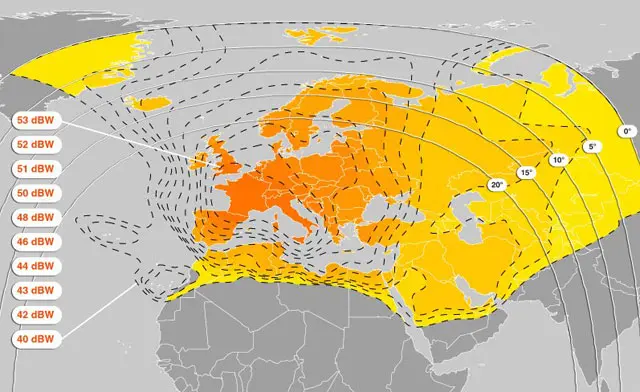
ArabSat operates a fleet of satellites positioned at various orbital slots. These satellites are strategically placed to ensure optimal coverage across the Middle East, North Africa, and parts of Europe. The fleet includes:
-
ArabSat 6A
-
ArabSat 5C
-
ArabSat 4B
-
ArabSat 4A
-
ArabSat 2 (and more)
Each satellite is equipped with high-powered transponders that enable broadcast services, including high-definition (HD) television, radio channels, and internet connectivity.
🛰️ Frequencies and Services on ArabSat
ArabSat offers a wide range of frequencies across different bands, including C-band, Ku-band, and Ka-band. These frequencies are used for:
-
TV and radio channels
-
Internet and data transmission
-
Private corporate communication networks
The specific frequencies used for different services can vary depending on the location of the user, and ArabSat offers detailed guidelines on how to access its channels and services through the appropriate frequencies.
For viewers and users who want to find the right frequencies for their satellite equipment, Freq Box is the perfect platform. Freq Box provides a detailed guide on ArabSat frequencies, helping users access satellite TV channels, radio stations, and communication services easily.
📡 How to Receive ArabSat Signals
To access ArabSat’s signals, users must have a satellite dish installed and properly aligned to the satellite’s position. The most common frequencies used for ArabSat TV and radio services include:
-
C-band: Typically used for long-range communication and high-quality television broadcasts.
-
Ku-band: Often used for regional TV broadcasting, offering high-definition channels.
-
Ka-band: Used for higher bandwidth services, including satellite internet.
By following the frequency guidelines available on Freq Box, users can ensure that their satellite systems are tuned to the correct frequencies to receive the best possible service.
ArabSat continues to play a pivotal role in the communication and broadcasting landscape of the Arab world. Its reliable services and wide coverage make it an indispensable tool for viewers, broadcasters, and businesses across the region. If you want to access ArabSat’s satellite channels or learn more On the subject of its frequencies, Freq Box is your go-to resource for all the information you need.
Every satellite operates using multiple transponders, each responsible for carrying groups of channels. When a transponder changes, channels vanish from receivers until users update the frequency. Quick tuning restores them instantly and prevents viewing delays.
Users often think scanning is difficult when, in fact, it only requires entering a few values. Frequency, symbol rate, and polarization form the foundation of tuning. Once inserted correctly, the receiver does the rest automatically.
Dish alignment remains one of the strongest influences on reception strength. Even with perfect transponder data, a misaligned dish produces weak signals. Proper setup guarantees stability and performance during heavy rain or cloudy weather.
Signal distribution inside the house also matters. Using splitters or low-quality cables can weaken reception. Replacing them improves clarity and reduces audio/video drops significantly.
Blind scan is useful for discovering newly added channels not yet listed online. It helps users explore satellite content freely. However, manual input remains the fastest approach when exact values are known.
Following satellite updates regularly prevents sudden channel loss. Instead of searching randomly, users simply enter the latest data and tune instantly. This eliminates confusion and saves valuable time.
Technical awareness transforms users from beginners into confident operators. They learn to identify causes of signal loss and fix them without assistance. Over time, tuning becomes second nature.
A well-maintained system ensures nonstop entertainment and information access day after day. Stability, clarity, and precision form the perfect viewing experience.
With updated frequencies and continuous learning, satellite reception remains reliable, enjoyable, and ready for every moment.